The Importance of Children's Toys in Childcare
Childcare is a comprehensive process that is applied from multiple aspects. One of the aspects of proper upbringing and caring for your child is choosing a safe entertainment environment aimed at developing their thinking and enhancing their abilities. Therefore, children's toys play a role in achieving sound childcare, as they help shape their mental and physical skills and positively impact their social and emotional skills.
In this article, we will discuss the importance of children's toys in childcare, how these toys contribute to developing their mental, physical, and social skills, and how to choose appropriate toys according to the child's needs and interests.
The Importance of Children's Toys:
Children's toys are not limited to entertainment only; they also contribute to developing various skills, including:
- Enhancing focus and attention skills: Toys like puzzles and shape-sorting games help develop focus and attention skills in children, which benefits their academic performance by making them more attentive to the information they receive during study.
- Developing language skills: Informational toys and stories enrich the child's vocabulary. They also help develop the child's ability to speak and express their thoughts simply.
- Developing motor skills: Physical toys like football and running provide healthier opportunities compared to sitting for long periods in front of electronic screens.
- Developing the child's imagination: Some types of toys, such as building blocks or modeling sets, allow children to design different shapes like houses or small cities. These toys encourage them to create imaginary stories and develop their creative thinking, where they can imagine characters and events revolving around what they build, enhancing their expressive and creative abilities.
- Boosting the child's self-confidence: The child feels confident when completing game tasks and reaching solutions, which also enhances their sense of satisfaction.
- Developing social intelligence: Some toys allow your child to play with others in a group, providing an opportunity to develop teamwork skills with peers, which strengthens their social intelligence.
Types of Children's Toys and Their Benefits:
There are many types of toys, each working to develop a specific skill:
- Physical toys for children: Such as various ball games, running, and cycling. They help maintain their physical health.
- Imagination and role-playing toys: Such as kitchen toys and dolls. These toys help develop children's imagination by encouraging them to create imaginary stories that allow them to interact.
- Puzzle toys: These are games that involve assembling pieces to form a specific shape, helping the child develop focus and attention skills, in addition to enhancing logical thinking.
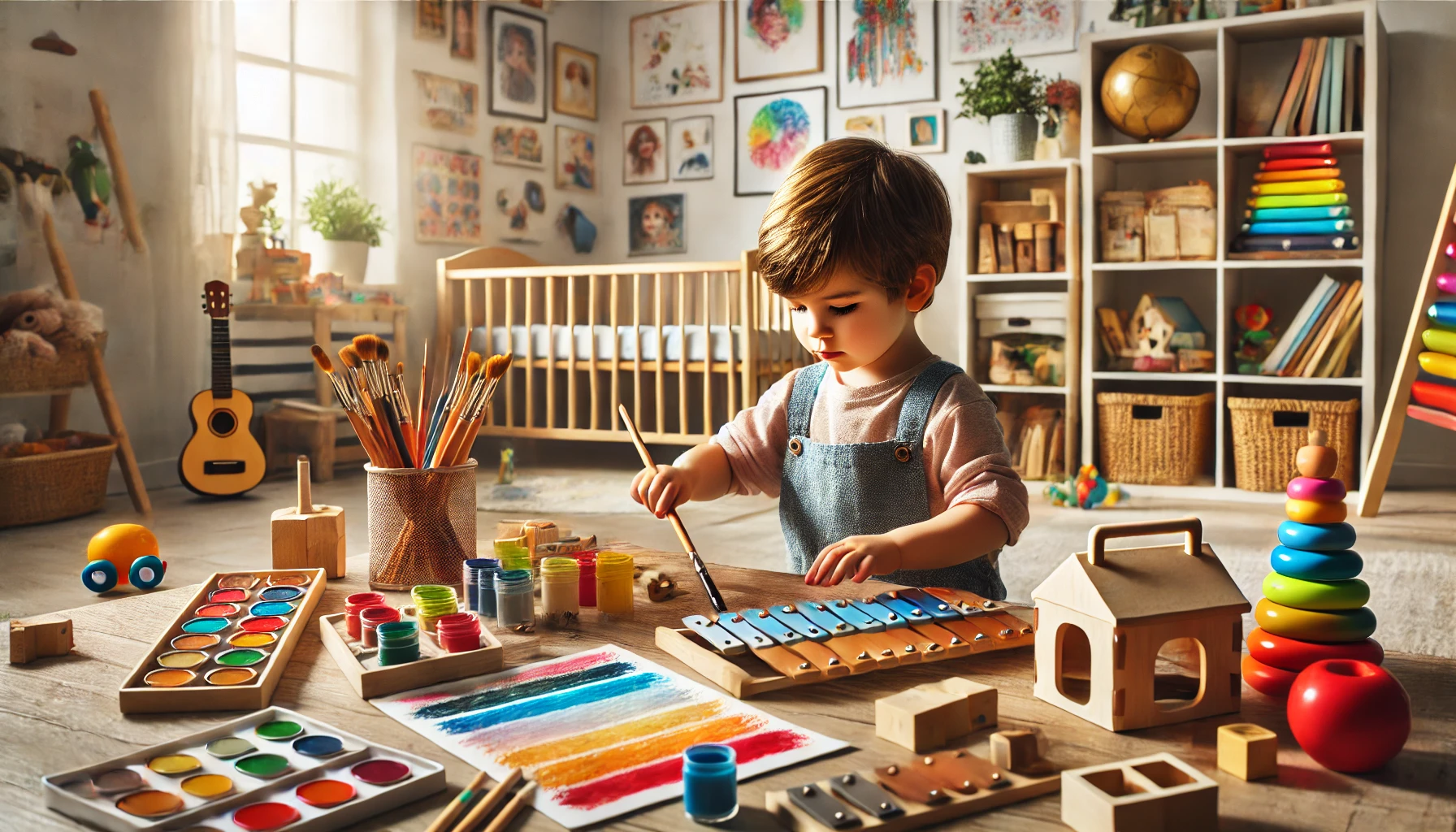
- Creative toys: Such as drawing and coloring toys, playdough, and building blocks. Creative toys give children the space to express their innovation and creativity, thus playing a role in forming their unique taste.
- Educational technological toys: Such as racing games and learning games that the child interacts with on various computer devices.
How to Choose the Right Toys for Your Child
We have learned about the benefits and types of toys, but to achieve these benefits, parents should consider some factors to maximize the benefits and prevent harm. Below are some important factors to consider when choosing toys for your child:
Child's Age
The child's age is one of the most important factors in determining the type of toys to choose. For example, a toy that requires deep thinking skills should not be chosen for a young child under two years old. Instead, choose a safe and simple toy that suits their mental abilities. You can seek advice from experts and check the age range specified on the toy's packaging, as manufacturers determine the appropriate age groups for each toy based on safety and mental development standards.
Age-Appropriate Toys:
- Children aged 0-1 year: Soft and comfortable toys like cloth dolls and large blocks.
- Children aged 1-3 years: Interactive toys like small cars and toys that make sounds.
- Children aged 3-5 years: Simple building toys and toys that help identify colors and shapes.
Safe Toys for Children:
Parents should choose toys made from safe materials for the child. They should also consider the way these materials are shaped to ensure they do not pose a danger when used.
Examples:
- Avoid toys made from weak plastic or those containing small parts that can be swallowed.
- Choose toys made from natural materials like safe wood and coated with non-toxic paint.
Appropriate Skills
It is important to identify the type of skills you want to develop in your child to direct you to the correct type of toys that support and enhance these skills.
- Developing fine motor skills like drawing and coloring.
- Gross motor skills like small bicycles.
- Developing language skills: Picture books and word games.
- Developing social skills: Group games and role-playing games.
Affordable Toys
Parents can choose toys that fit their budget as long as they achieve the intended purpose.
- Simple toys that can be made at home, such as hand puppets made from old socks.
- Reusable toys that last a long time, like blocks and puzzle games.
Interests
Children should not be forced to play with a specific type of toy. Instead, the toys should match their interests and be enjoyable for them.
- If the child loves music, choose toys that produce musical sounds.
- If the child prefers artistic activities, provide drawing and coloring tools.
Additional Tips
- Check the safety instructions on the toy's packaging.
- Supervise the child while playing to ensure their safety.
- Encourage the child to explore new types of toys to develop different skills.
Children's toys are not just a means of entertainment; they are a source of learning and development. As with many things in life, toys are a double-edged sword; they can cause harm if not used correctly. Therefore, do not overindulge in buying many toys that do not provide benefits, and participate in your child's playtime to add spirit and encouragement. Teach your child to organize their toys and set a specific time for play. By following these tips, the desired goals of using toys are achieved, their creativity grows, and their problem-solving skills develop.
Nifas Advice
Do not overindulge in buying too many toys for your child without purpose. Instead, focus on selecting toys that enhance their mental and physical skills. Ensure the toys are age-appropriate, made from safe materials, and contribute to boosting their creativity and thinking. Engage in playtime with them to provide support and encouragement, and help them organize their toys to maintain a tidy and safe environment.
Frequently Asked Questions
How do children's toys contribute to their skill development?
Children's toys help develop mental, motor, and social skills, such as improving focus, enhancing imagination, and boosting self-confidence.
What types of toys enhance focus and attention skills?
Puzzles and shape-sorting games encourage logical thinking and problem-solving, which enhance focus and attention.
What types of toys help develop a child's language skills?
Interactive stories and word games enrich vocabulary and improve a child's ability to express and communicate.
How can I choose age-appropriate toys for my child?
It is best to choose toys based on the age range specified on the packaging, as toys vary for infants, toddlers, and preschoolers.
What are the basic criteria for choosing safe toys for children?
Toys should be made from non-toxic materials and free of small parts that could pose a choking hazard.
How do technological toys affect children?
Technological toys can be beneficial when used in moderation, as they develop thinking skills, but they may lead to addiction if playtime is not regulated.
Are there toys that help develop social intelligence?
Yes, group games and toys that require cooperation among children enhance their communication and teamwork skills.
How can I provide beneficial toys at an affordable cost?
You can create simple homemade toys like hand puppets or purchase reusable toys like building blocks and puzzles.