Play and Educational Activities for Children
Play is the child's first world, through which they discover things around them and learn new skills in a fun way. Educational activities vary according to the child's age, as each stage requires activities that suit their abilities and enhance their thinking and sensory development. In this article, we will discuss a range of educational activities that promote child development and help them acquire new skills in a fun and interactive way, with a focus on age-appropriate activities and the benefits they provide.
Educational Activities for Children
Educational activities for children are diverse and vary according to the age group. Each age has specific activities that help the child develop the required skills.
Educational Activities for Infants (Babies)
Playing with infants may seem limited because they cannot sit, walk, or talk, but learning begins very early, even through simple daily interactions. According to the American Academy of Pediatrics (AAP), educational activities can start from the moment the baby begins to smile, as they help the child interact with the world around them and develop their senses.
- Peekaboo: This game helps the child understand that objects do not disappear completely even if they cannot see them. You can cover your face with your hands and then suddenly remove them while saying "Peekaboo!", which makes the child react with laughter and surprise. This game enhances their perception and develops their visual and motor responses.
- Interaction with Faces and Expressions: Infants are highly attracted to faces and their expressions, as they try to imitate smiles and mouth movements. Try to maintain eye contact, smile, and talk to them in a calm voice. This strengthens emotional bonds and stimulates their social skills.
- Exploring Colors and Textures: Infants prefer bright and contrasting colors, so you can provide toys with clear patterns or different color shades. Additionally, you can give them objects with varied textures, such as soft or rough fabric toys, which helps develop their sense of touch and sensory exploration.
- Discovering Sounds: Children enjoy hearing and exploring different sounds, so you can give them toys that make sounds when shaken, such as rattles or bells. You can also let them experiment with making sounds by banging plastic spoons on the table or playing with safe household items, which helps develop their auditory perception and interaction with the environment.
- Talking to the Baby: Even if they cannot respond, hearing sounds and words helps the child develop their language skills. You can talk to them during diaper changes, meal times, or playtime, explaining what you are doing in a clear and calm voice. This interaction teaches them voice tones and makes them more capable of recognizing words later.
Educational Activities for 2-Year-Olds
As the child grows, their play options increase, as they become more interactive with objects, colors, and sounds. You can offer a variety of activities suitable for this stage, such as:
- Colorful Toys: Playing with small balls, cars, and blocks helps develop the child's visual and motor skills. These toys give them the opportunity to explore different colors and shapes, while also enhancing their ability to grasp and move objects in a coordinated manner, improving hand-eye coordination.
- Simple Puzzles: Simple puzzles help develop concentration and problem-solving skills. You can start with puzzles containing large and easy-to-assemble pieces, where the child tries to match shapes and pictures, enhancing their visual perception and logical thinking.
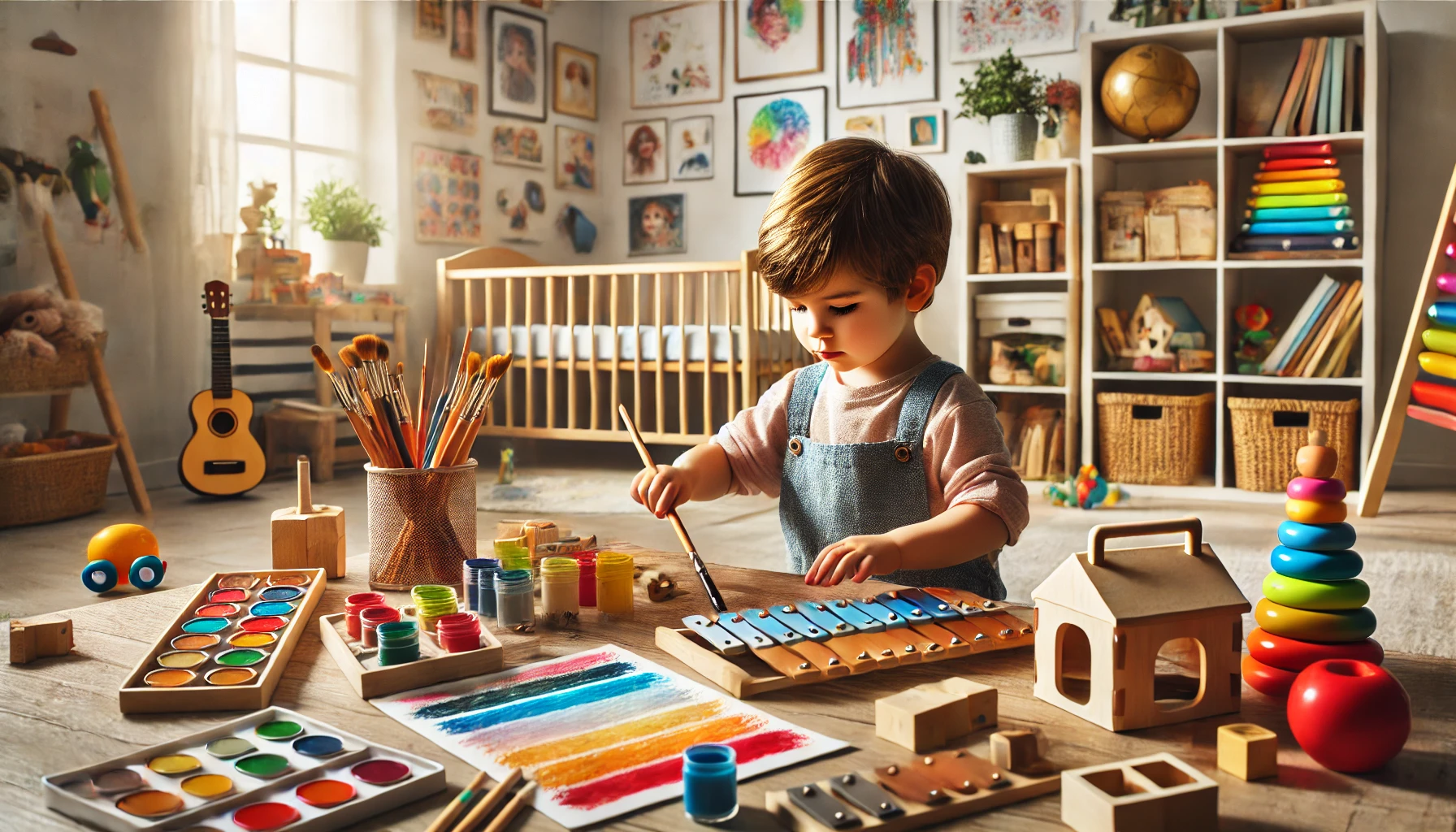
- Drawing and Coloring: Coloring and drawing are among the best activities for developing fine motor skills, as they help the child hold colors and move their hand with confidence. Use safe crayons or chalk, and encourage them to experiment with different shapes and colors to develop their artistic sense and ability to express themselves.
- Daily Reading: Reading stories is a beneficial habit for the child, as it helps expand their vocabulary, develop their imagination, and stimulate their comprehension. Choose books with colorful pictures and short stories, and involve them in the reading process by pointing to pictures and repeating simple words, making them more engaged with the book.
Educational Activities for 3-Year-Olds
At the age of three, the child's language skills grow, and they need educational activities that are not only for entertainment but also for learning. Every activity the child engages in affects their personality, cognitive development, and helps them develop their skills. Before starting play, it is essential to organize and arrange play activities, such as:
- Organizing the play area to ensure it is safe and suitable for play.
- Providing and arranging a variety of educational activities and toys, as children get bored quickly.
- Preparing different healthy snacks for the child to eat during play, giving them energy to continue playing, moving, and learning.
- Organizing group games if there is more than one child, so they can benefit from them and learn to interact and share with others.
There are many games for three-year-olds, including:
- Guessing Sounds and Smells: This is a fun game your child will love. Collect animal sounds and teach them to your child. Then, play the sounds and let the child guess each sound and its source. Similarly, with smells, bring foods your child likes, have them close their eyes, and guess the type of food. This activity helps children develop their hearing and smell senses, as well as increase focus and listening skills.
- Playing with Playdough: Provide a set of colored playdough and let your child play with it to create different shapes. This activity enhances the child's sense of touch.
Nifas Advice
Play is the key to your child's mental and physical growth and development, so make sure to choose educational activities that suit their age and enhance their skills. Make playtime an opportunity for interaction and learning, and balance between physical activities and mental games to create a fun and beneficial learning environment.
Frequently Asked Questions
When can I start introducing educational activities to infants?
You can start from the first months using visual interaction, sounds, and simple sensory toys like peekaboo or rattles, which enhance sensory and cognitive development.
What activities are suitable for a 2-year-old?
Activities like playing with blocks, simple puzzles, drawing, and picture reading help develop fine motor skills, language, and imagination.
How do educational activities help at the age of 3?
Activities enhance communication, focus, and social interaction skills, especially through group play and sensory experiences like guessing sounds or using playdough.
Is drawing and coloring really beneficial?
Yes, it enhances fine motor skills, creative expression, and boosts the child's confidence through exploring colors and shapes.
What is the role of reading in a child's development?
Early reading expands vocabulary, stimulates imagination, and enhances listening and comprehension skills, especially if it is interactive and uses pictures and sounds.
What activities are recommended for 5-year-olds?
Activities like learning letters and numbers through play, counting, and forming words with playdough or cards are very suitable at this age to strengthen academic and motor skills.
Are electronic games always harmful?
They are not harmful if used moderately and appropriately, but avoid violent content and limit playtime to no more than one hour per day for children.
How do I choose the right electronic game for my child?
Check age ratings (like ESRB and PEGI) and ensure the content is educational or interactive, while avoiding games with violence or misleading ads.